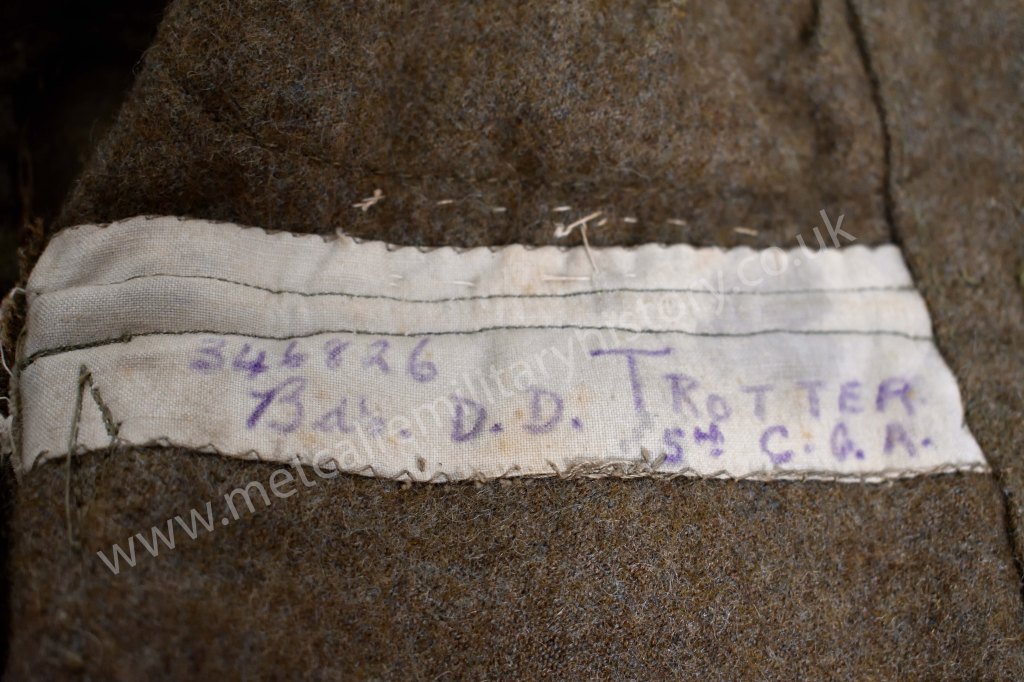
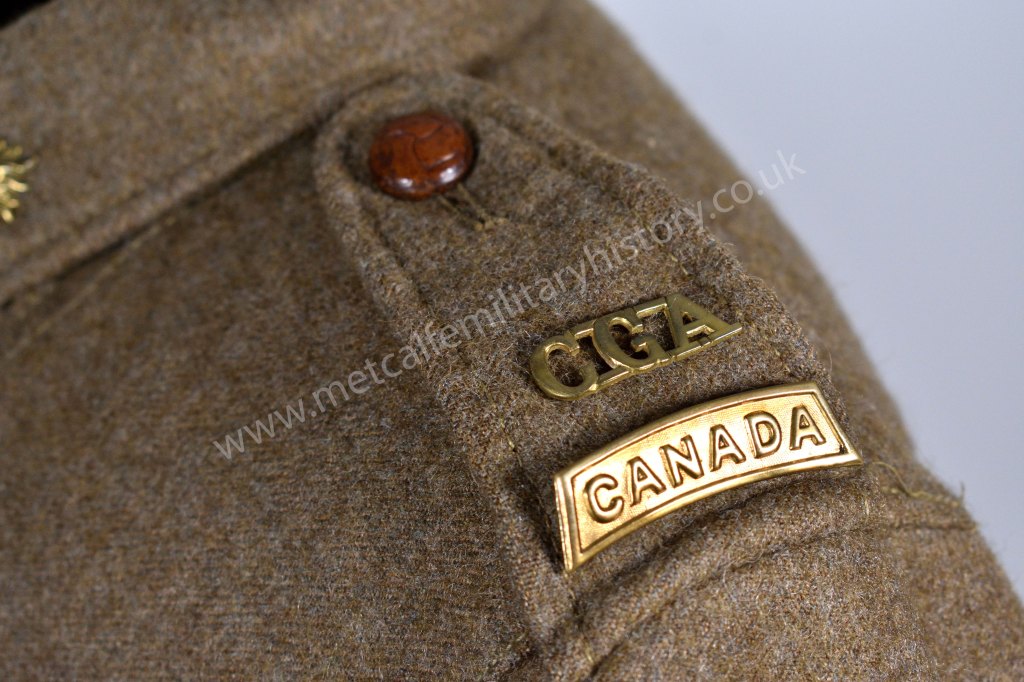
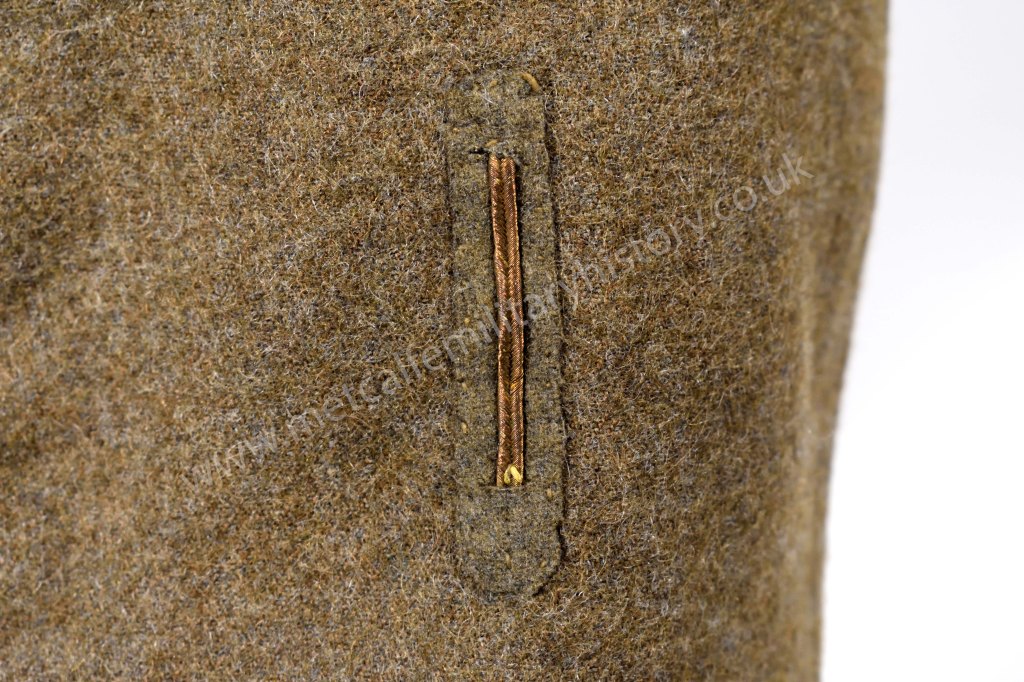
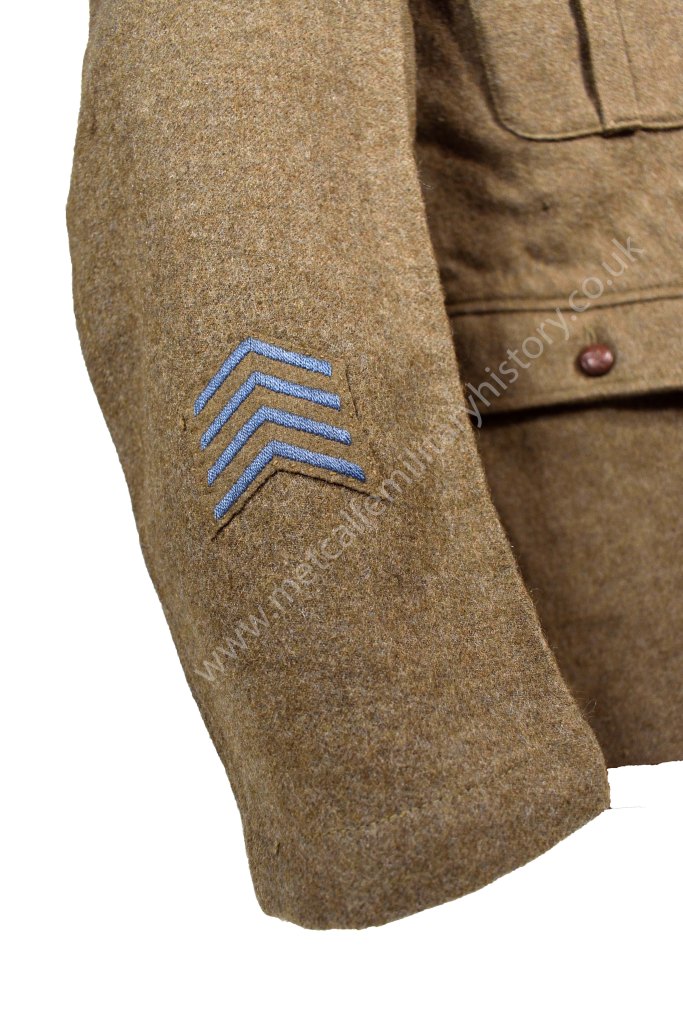
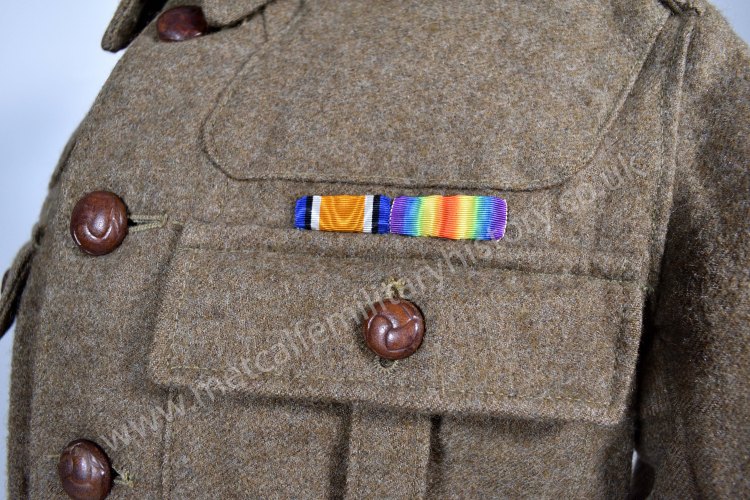
The Service Dress jacket is iconic of the uniform that the British soldier fought the First World War in. As such, they now are highly prized amongst collectors and although not particularly scare, command premium prices. This particular jacket is a standard British wartime example, issued to a Canadian soldier, David Douglas Trotter.
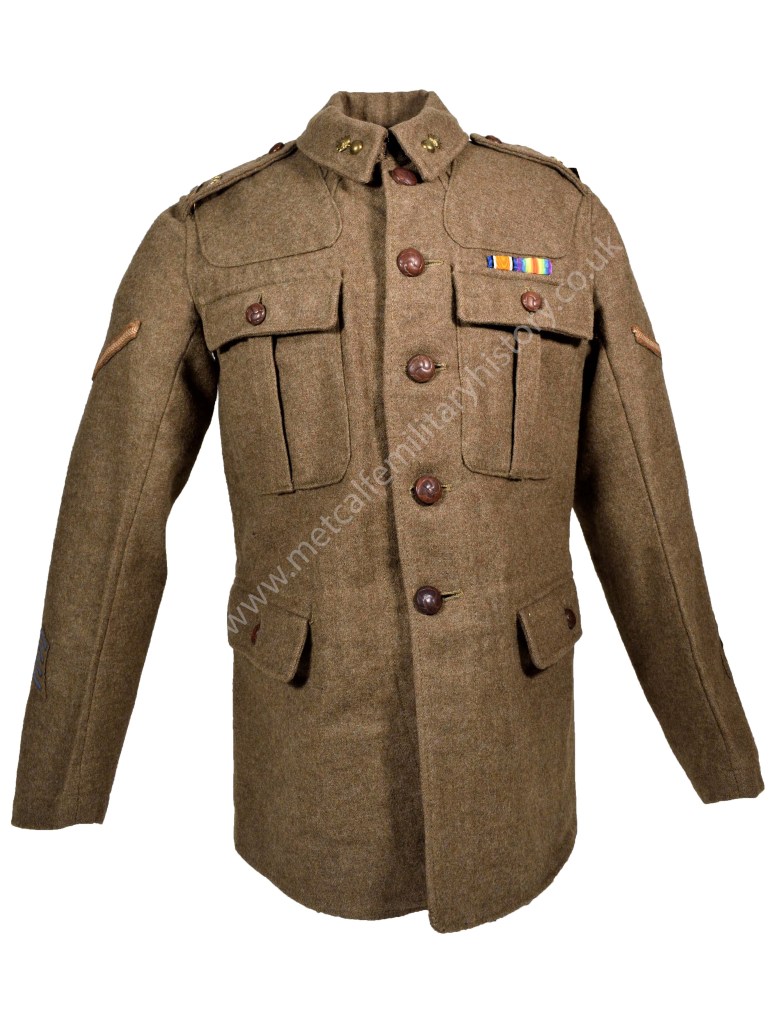
First introduced in 1902, the Service Dress uniform saw use in the British Army all the way through to the 1960s, with various modifications through the years. It was replaced as the standard service uniform when Battledress was introduced in 1937, but was still being worn into the early days of the Second World War.
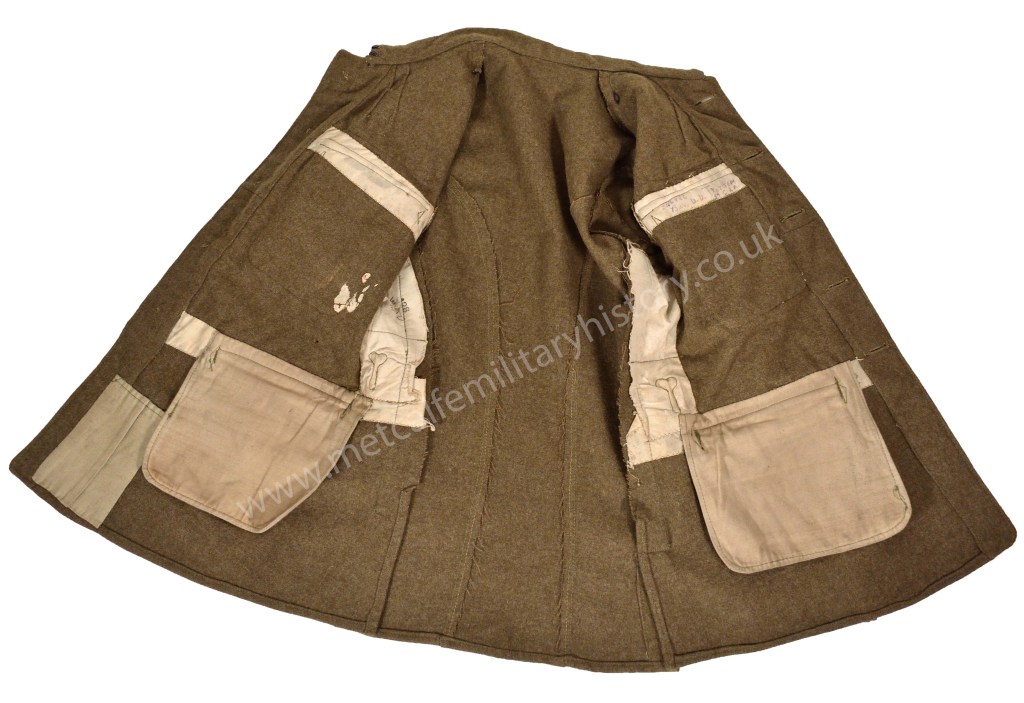
The pattern worn in the First World War have some tell-tale signs, the most common being the lining, dated paper labels and two pleats under the collar as apposed to the later single pleat.
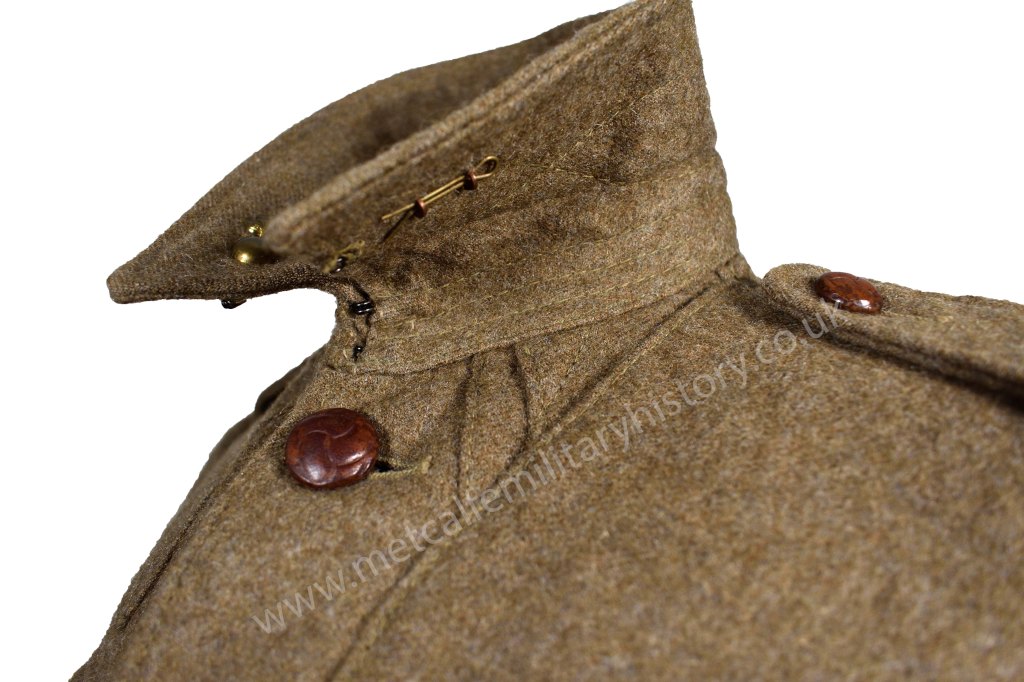

This particular example also has the more unusual leather buttons. These were introduced as a wartime economy measure, but are far less common than those with the standard General Service buttons.
David Douglas Trotter
David Douglas Trotter was born on 2nd November 1896 in Douglas, Lanarkshire to David and Annie Trotter. By 1901, the family were living at Barvas, Isle of Lewis where David was working as the Head Master of the local Lionel School.
In June 1912, the family emigrated to Canada, boarding the SS Athenia (a Donaldson Line ship) bound for Montreal. David found work as a Bank Clerk in and resided at 1908 St Urbain Street, Motreal.
In late 1914, David enlisted in the Canadian Forces, joining the 3rd Battery, 6th Brigade, Canadian Field Artillery. In March 1916, he re-enlisted at Montreal for overseas service with the Canadian Expeditionary Force (CEF), this time in the Canadian Garrison Artillery as part of the 2nd Reinforcements, Siege and Heavy Artillery.
346826 Gunner David Douglas Trotter
Shortly after re-enlisting, David embarked for England on 14th May 1916, arriving on 29th May. On arrival he joined the Canadian Reserve Depot at Horsham and a week later was transferred to 165th Canadian Siege Battery. The Battery had been formed a year previous, but had yet to proceed to the Western Front. David, along with 165th Canadian Siege Battery proceeded to France, arriving at Boulogne on 21st September 1916. On 11th January 1917, the 165th Canadian Siege Battery were re-designated as 5th Canadian Siege Battery.
Suffering from eye refraction, David was admitted to No. 2 Canadian Field Ambulance on 9th March 1917, where he spent a day for treatment before returning to duty.
After having spent several months on the Western Front, David was promoted to Bombardier on 8th June 1917.

On 6th September 1917 David fell victim to a German gas attack and was admitted to No. 6 Casualty Clearing Station with gas poisoning. This was severe enough that he was evacuated to the UK and admitted to the 1st Southern General Hospital in Dudley, Birmingham on 13th September 1917. He remained here until moving to a convalescent hospital at Woodcote Park, Epsom on 1st October 1917. During his period at Epsom, David had acted as Mess Corporal in the hospital. From Epsom, he moved to the reserve at Witley on 26th October 1917.
David did not return to the Western Front and instead was posted to the Reserve Brigade, Canadian Field Artillery at Witley. On 3rd March 1919 he proceeded to Kimmel Park for return to Canada. He embarked for home onboard the HMTS Empress of Britain on 23rd March. His demobilisation was swift upon return to Canada and on 1st April 1919 David returned to civilian life.
David returned to working for the bank, and ended up becoming a bank manager in Montreal. Little else is known about his later life at present. He died aged 90 on 27th November 1986 at Fredericton, New Brunswick. He is buried in Forest Hill Cemetery, Fredericton.
 Metcalfe Military History