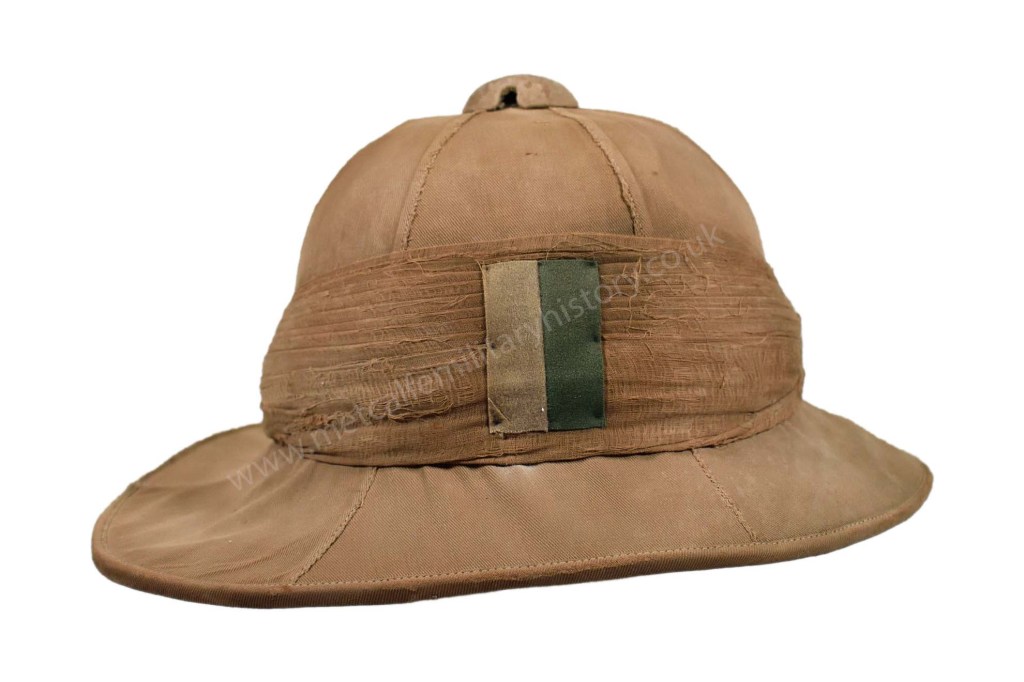
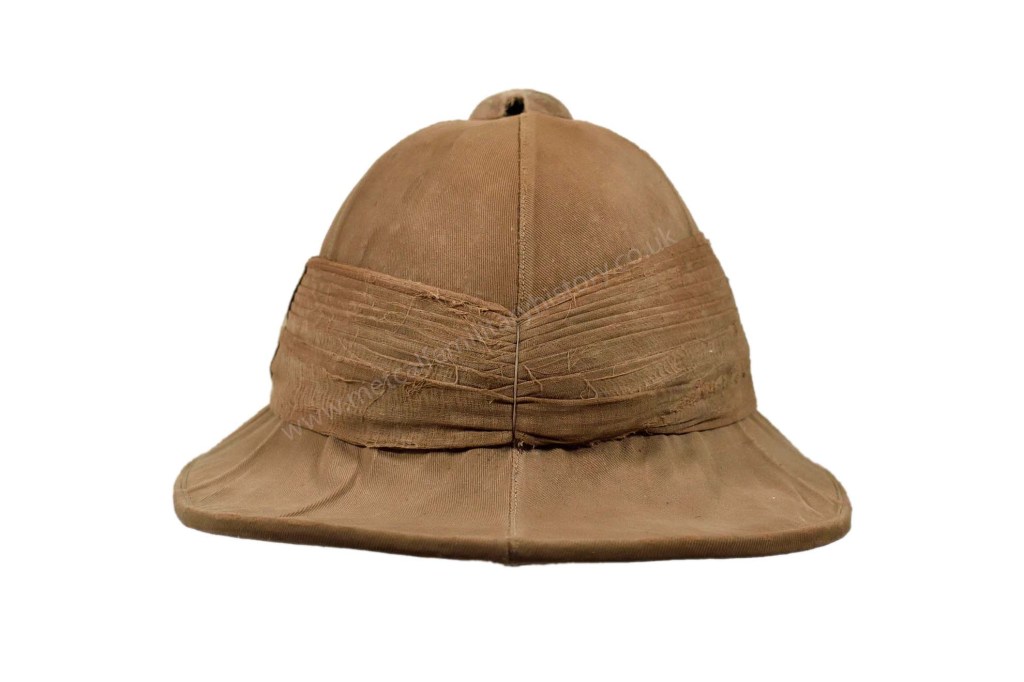
The ‘Wolseley’ pattern helmet (its official designation being – Helmet, Universal, Khaki) was the standard issue headwear for British troops in hot climates during the Great War. It had become the standard issue sun helmet in the British Army from May 1904, replacing the previous Colonial / Foreign Service pattern. The Wolseley is instantly recognisable for its distinctive shape.
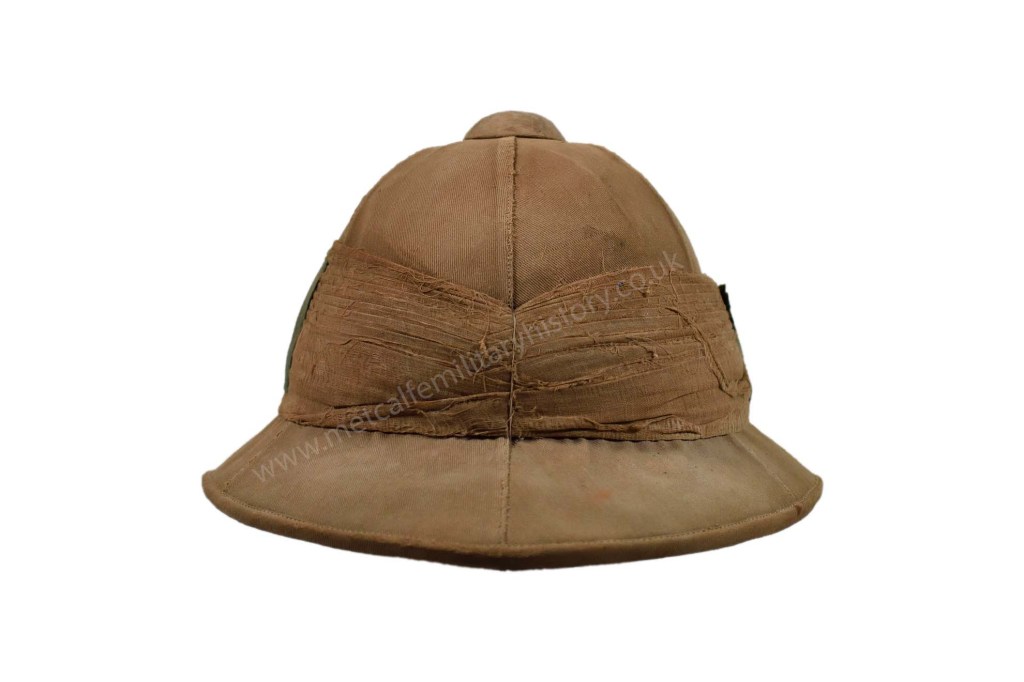
The Wolseley helmet continued in use until the Second World War, when it was phased out in 1943 in favour of the protective steel helmet. This particular example is sadly missing the leather chin strap.
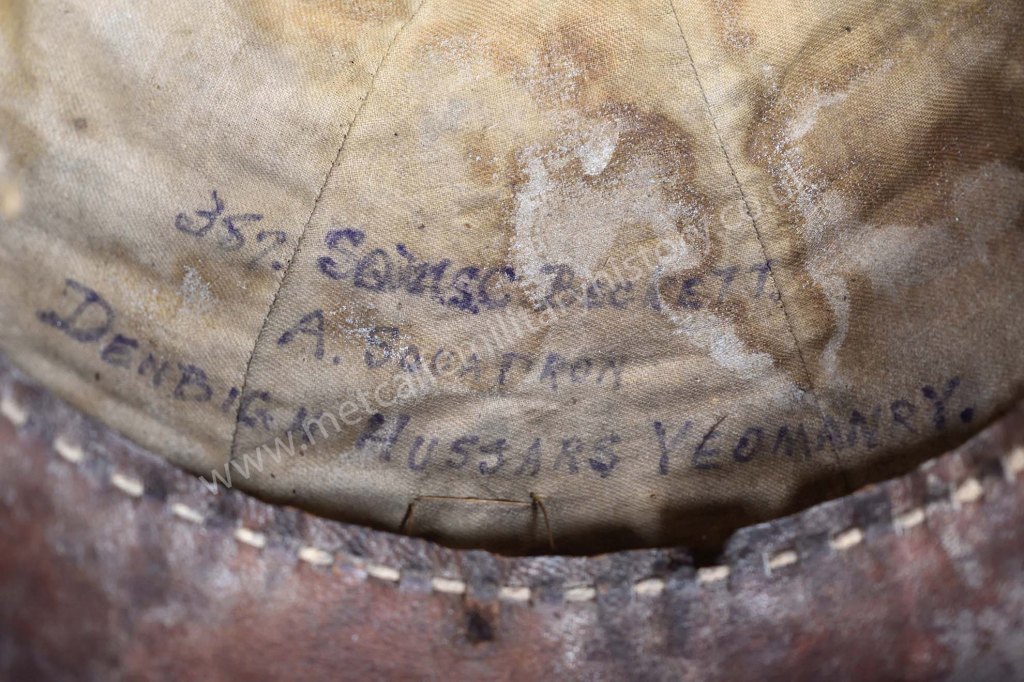
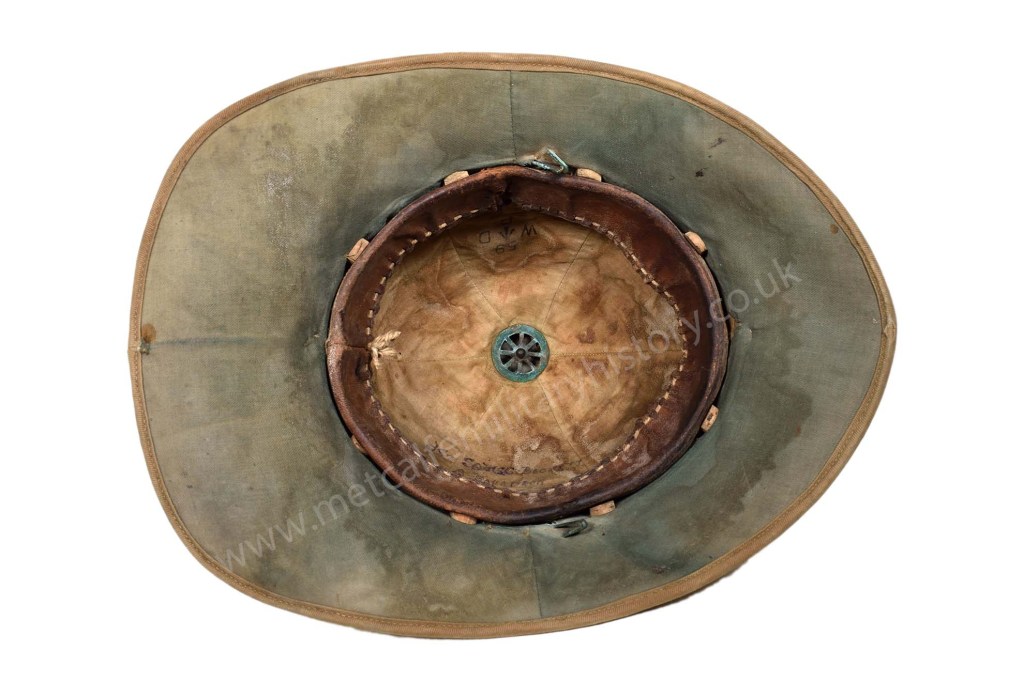
Like all military kit, the soldier’s details were to be stamped inside, which should have included date of issue (month and year) followed by regimental number and regiment. This practice was soon neglected on the outbreak of war with the huge influx of recruits and issue of service uniforms and equipment.
Luckily, the original owner of this helmet wrote his particulars inside, as was often the case with these helmets issued to Territorials during the Great War (noted from a number of surviving examples) – 387 SQMS C Beckett A Squadron Denbigh Hussars Yeomanry.
Adrian Cecil Beckett (known as Cecil) was born at Ruabon, Denbighshire in 1885, one of 5 children of George and Sarah Ann Beckett. Cecil followed in his fathers footsteps, becoming a tailor and joining the family business. In 1911, the census shows Cecil living with his parents at No. 4 Tai Clawdd, Ruabon. In the same year, he joined the local Yeomanry Regiment as a Territorial soldier, The Denbighshire Hussars. Cecil was a member of A Squadron, whose headquarters were in Wrexham, but had a drill hall in Ruabon.
Cecil rose quickly through the ranks, perhaps thanks to his trade as a tailor, which certainly would have been beneficial as a Squadron Quartermaster Sergeant, a rank he held on going overseas in 1916. The regiment had been mobilised on the outbreak of war in August 1914, but had been stationed in the UK until early 1916. In November 1915, they lost their horses, becoming a dismounted unit just prior to being posted overseas.

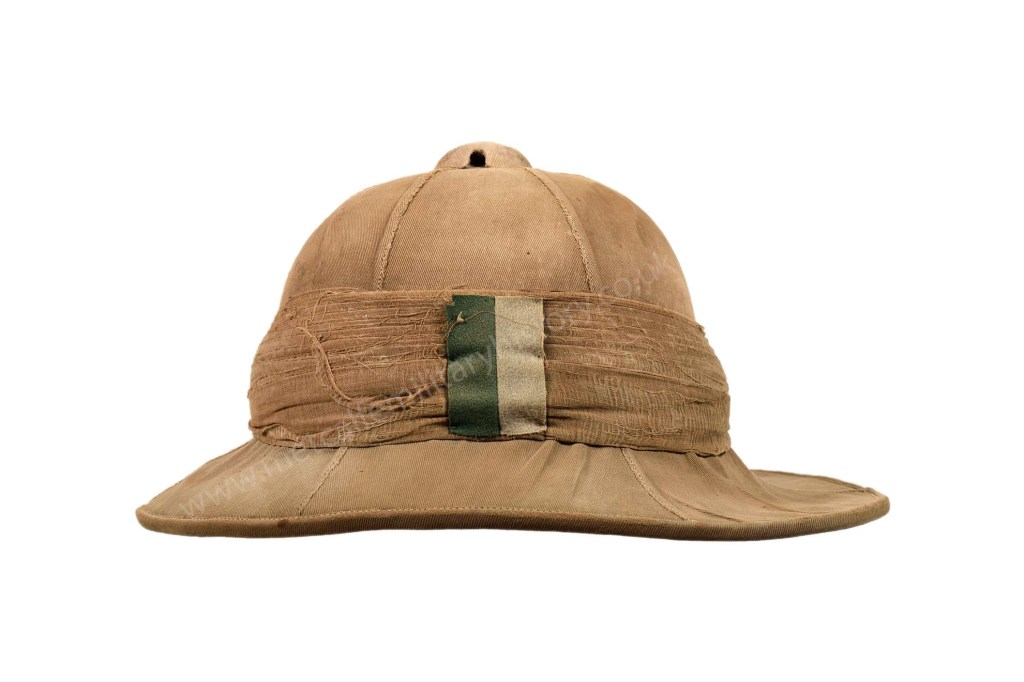
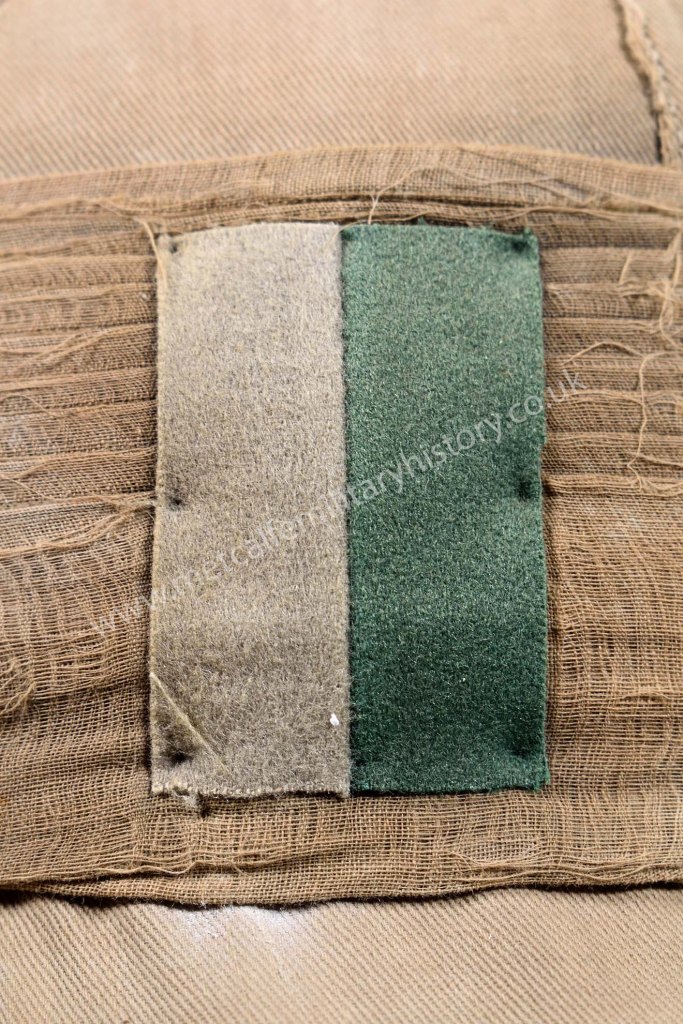
In March 1916, the Denbighshire Hussars moved to Egypt, and it is most likely this helmet was issued at this point. The regiment adopted a green and white flash (regimental colours), worn on both sides of the helmet, attached to the pugaree (derivative of Pagri – Hindu and Urdu for bandage – which can be seen wrapped around the helmet). These can clearly be seen still attached to this helmet.
During this period in Egypt, the Denbighshire Hussars were posted in the Western Desert, in operations against the Senussi. In February 1917, the regiment were formerly converted to infantry, and became the 24th (Denbighshire Yeomanry) Battalion, Royal Welsh Fusiliers.
Cecil had proved himself an efficient soldier and quartermaster, and as such, was commissioned in June 1917, becoming an officer in the Royal Field Artillery. Due to this move, we can categorically date his helmet as being issued and worn between March 1916 and June 1917. We can see from the sweat staining inside that the helmet was well used during this period.
After the war, Cecil returned to civilian life and to Ruabon, resuming life as a tailor. In August 1919 he married a nurse, Florence Alice Griffiths at Wrexham and the 1921 census shows a son born in the same year, Cecil Stanley Beckett.
On the outbreak of the Second World War, Cecil once again donned uniform, this time commissioning as a Pilot Officer in the Royal Air Force in June 1940. He served within the Administrative and Special Duties branch. Sadly, little is known of his Second World War service at present.
Cecil once again returned to civilian life after the war. He died in Ascot in 1957, aged 72.
 Metcalfe Military History