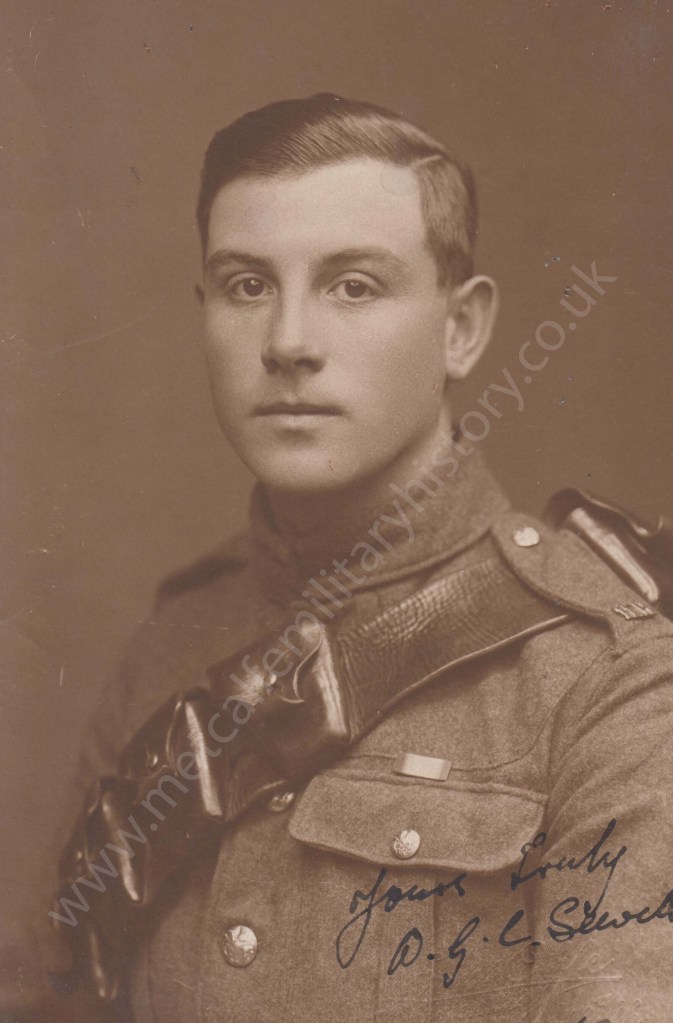
Photographs of British soldiers during the Great War, often show medal ribbons being worn. One such ribbon appears frequently in late war photographs – The 1914 Star. The 1914 Star was a war medal, awarded to British troops who had served in France and Belgium during the early months of the war in 1914.
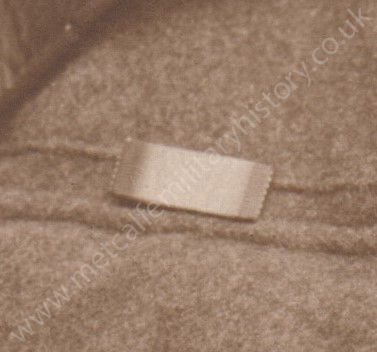
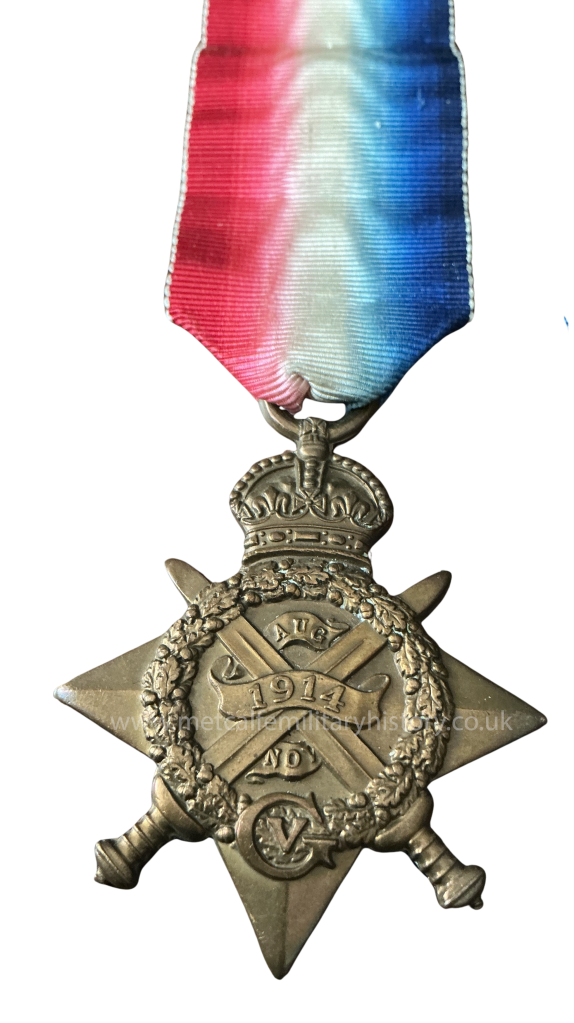

The 1914 Star was approved under Army Order 350 of 1917, published on 24th November 1917, the idea originally being put forward by King George V. The Red, White and Blue ribbon was issued first, from around January 1918, making it easy to narrow down the date of photographs where the ribbon is worn to 1918 onwards.
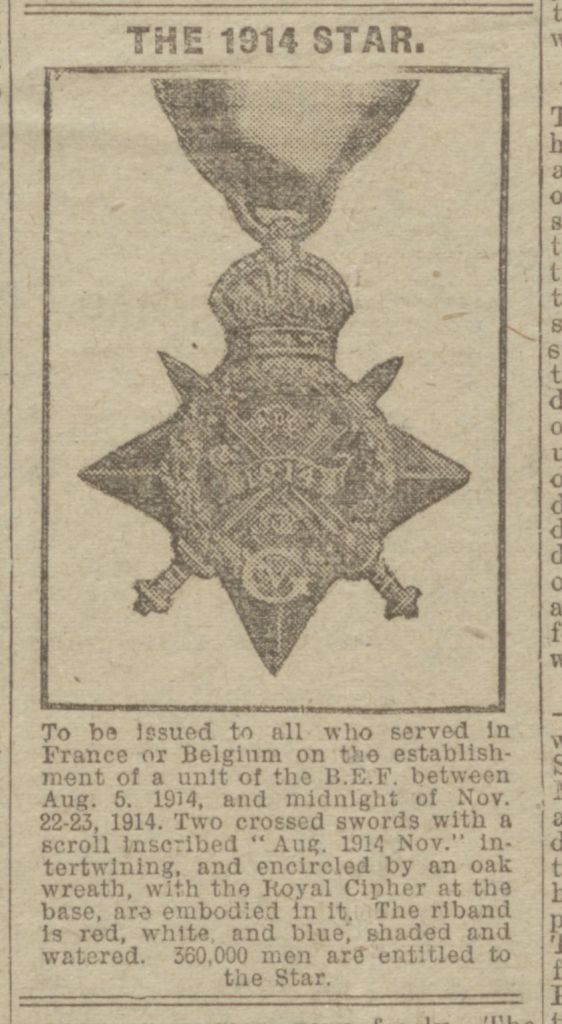
No further details of the medal design were given in the Army Order, but soon after, descriptive reports began to surface, like this example published in the Runcorn Guardian on 11th December 1917 – “a four-pointed star in bright bronze. Two crossed swords with a scroll inscribed “Aug., 1914, Nov.” inter-twining, and encircled by an oak wreath with the Royal Cypher at the base, are embodied therein. At the topmost point of the star is a crown, at the top of which is a ring for the riband.“
Eligibility
The original order listed the following as eligible for the Star:
- “All officers, warrant officers, non-commissioned officers and men of the British and Indian Forces, including civilian medical practitioners, nursing sisters, nurses and others employed with military hospitals, who actually served in France or Belgium, on the establishment of a unit of the British Expeditionary Forces, between the 5th August, 1914, and midnight of the 22/23rd November, 1914.“
Clasp and Roses
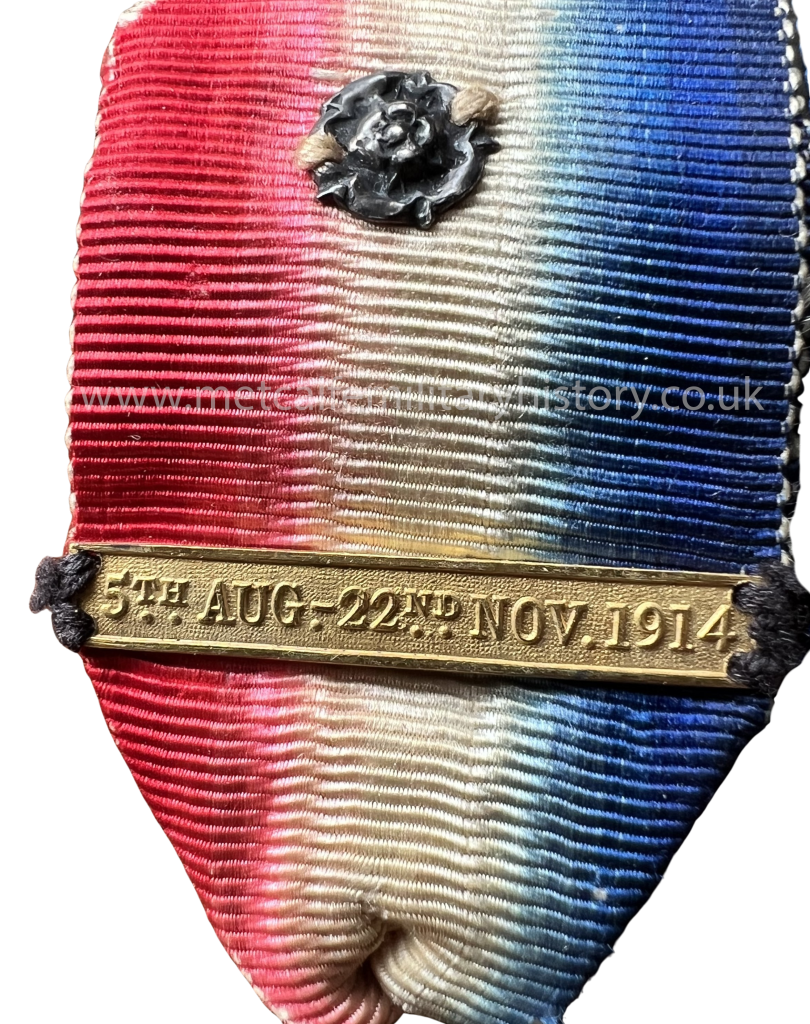
Although the original Army Order stated that no clasps would be issued, this was changed with Army Order 361 of 1919. This introduced a clasp to be sewn directly on the ribbon of the 1914 Star for those who served under fire during the eligible dates. The clasp itself was to be “in bronze and and will bear the inscription: “5th Aug.-22nd Nov., 1914.“

The full eligibility criteria for the clasp was as follows:
- “Officers and soldiers who were actually present on duty within range of the enemy’s mobile artillery and were on the strength of, or attached to the units and formations set forth in Appendix A between the above mentioned dates, will be eligible for the award.“
- “An individual who served with a formation, otherwise than named in Appendix A, will only be granted the clasp on furnishing a certificated signed by an officer, warrant officer, or non-commissioned officer not below the rank of sergeant personally cognizant that the individual served on duty within range of the enemy’s mobile artillery during the period referred to in paragraph 1 [5th August to 22nd November 1914].”
When the 1914 Star ribbon was worn on uniform, a small silver rosette was worn in the centre, to denote the clasp. Two of these ‘roses’ were issued with each clasp.
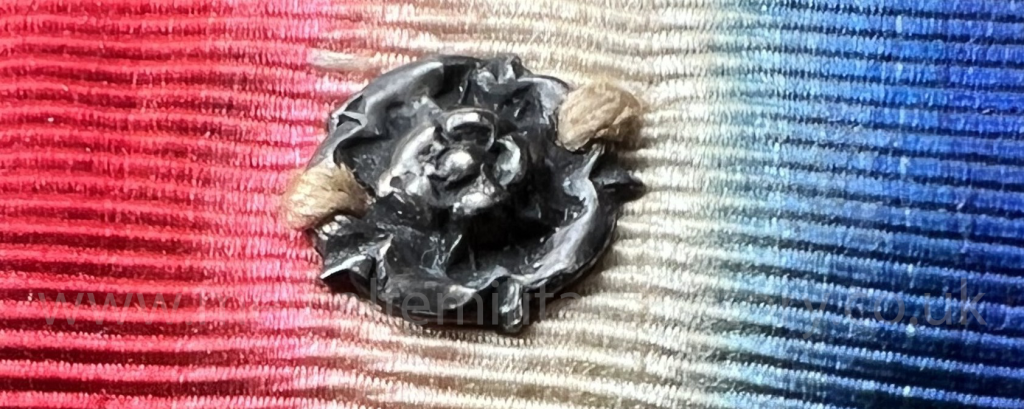
Often on military records such as medal index cards and medal rolls, C&R will be seen in relation to the 1914 Star, denoting ‘Clasp and Roses’.
Issuing and Wearing
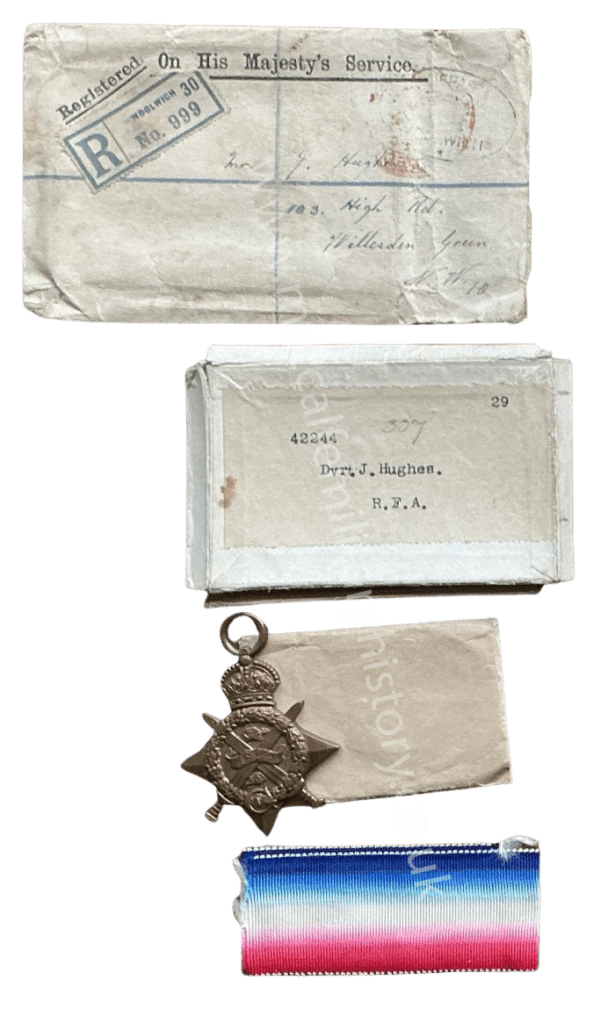
In total, nearly 380,000 1914 Stars were issued to British troops and attached personnel. The ribbon itself was issued first, with 4 inches per recipient being authorised under Army Council Instruction 1885 in December 1917.
Naming
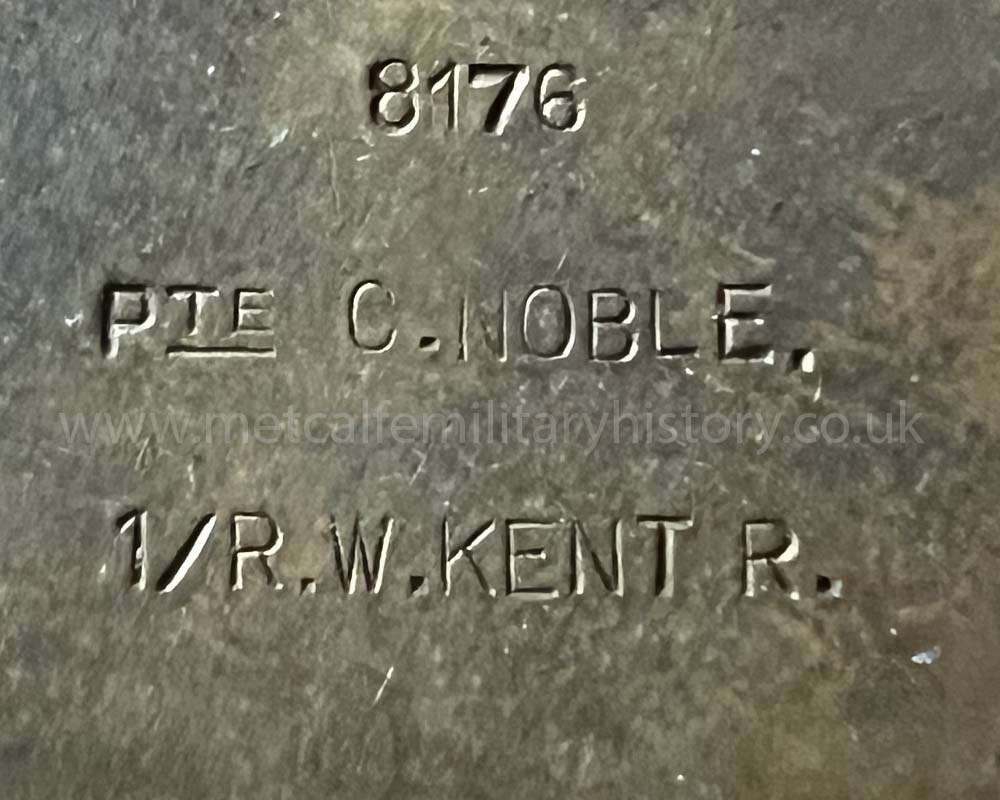
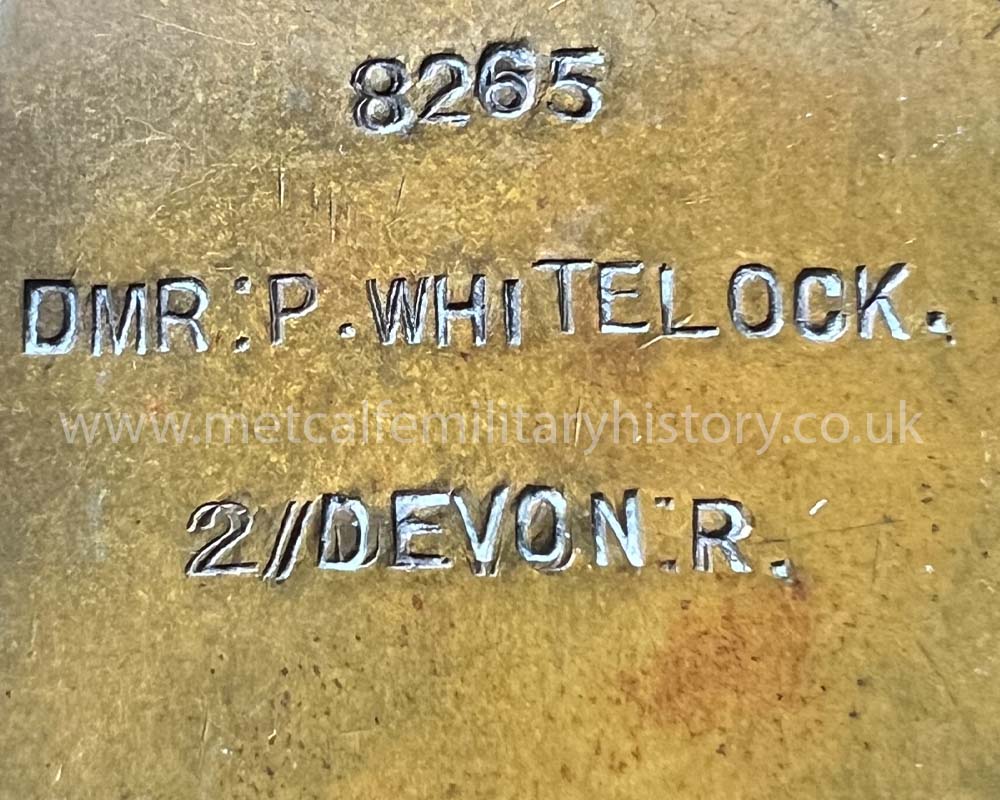
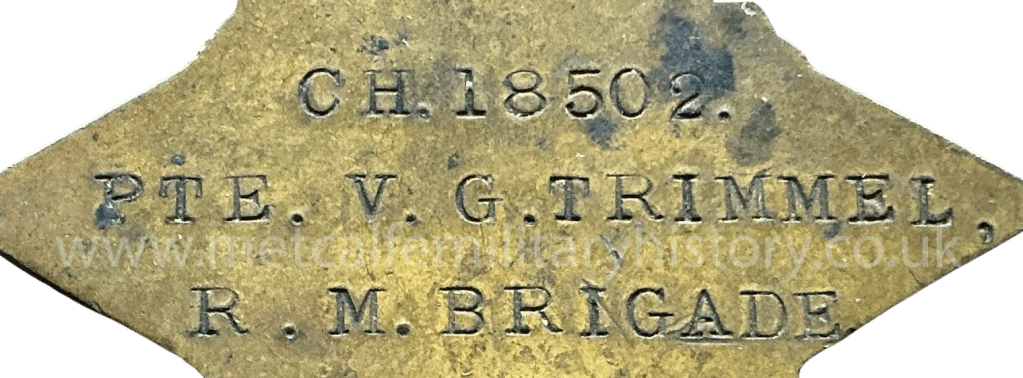
The 1914 Star was issued with the individuals details stamped on the rear. This was in the format of Number, Rank, Name (Initials and Surname) and Regiment. For infantry regiments, the battalion number was also included. Officers medals were named in the same fashion, but without a number (officers did not have regimental numbers).

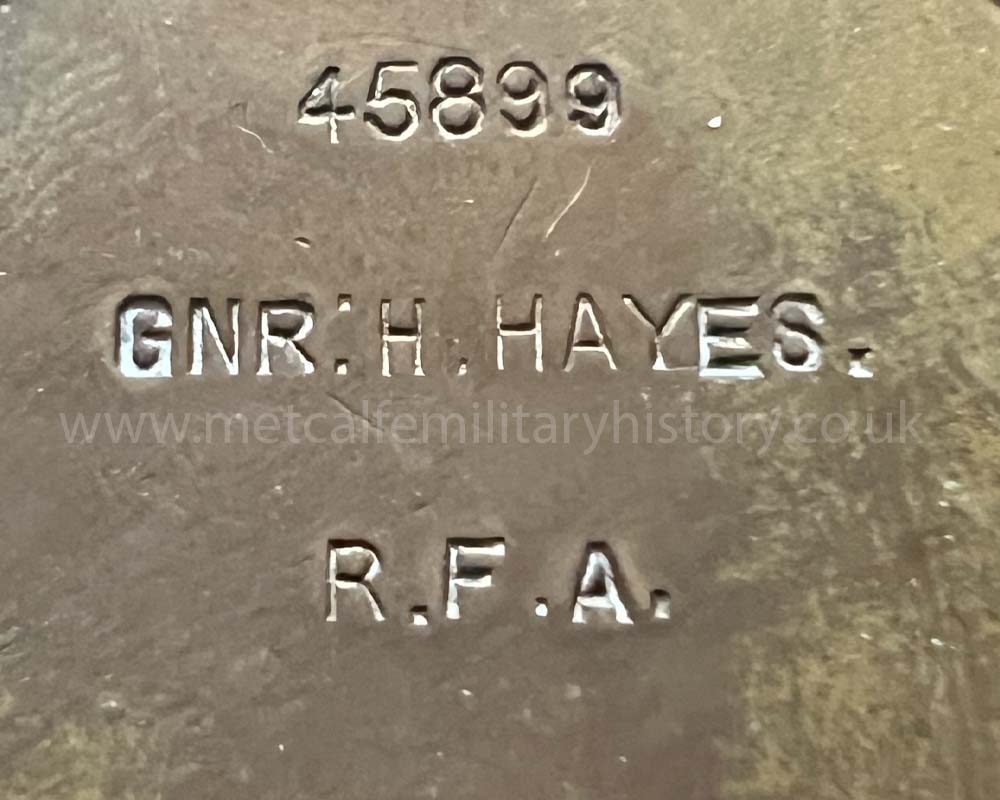
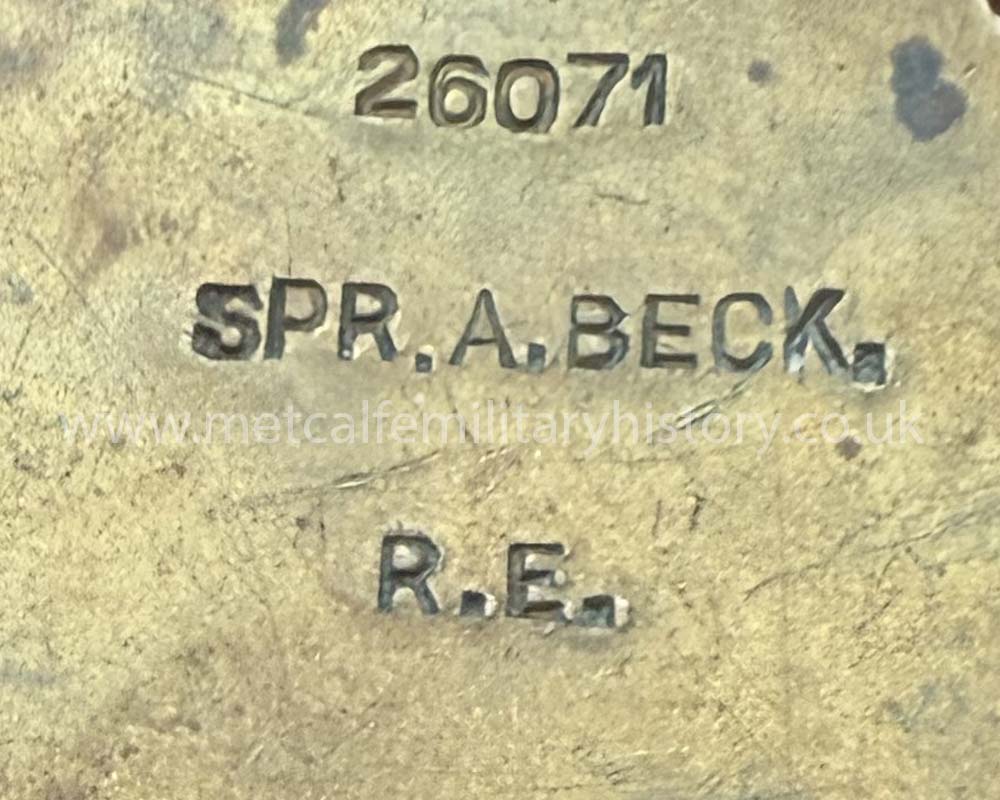
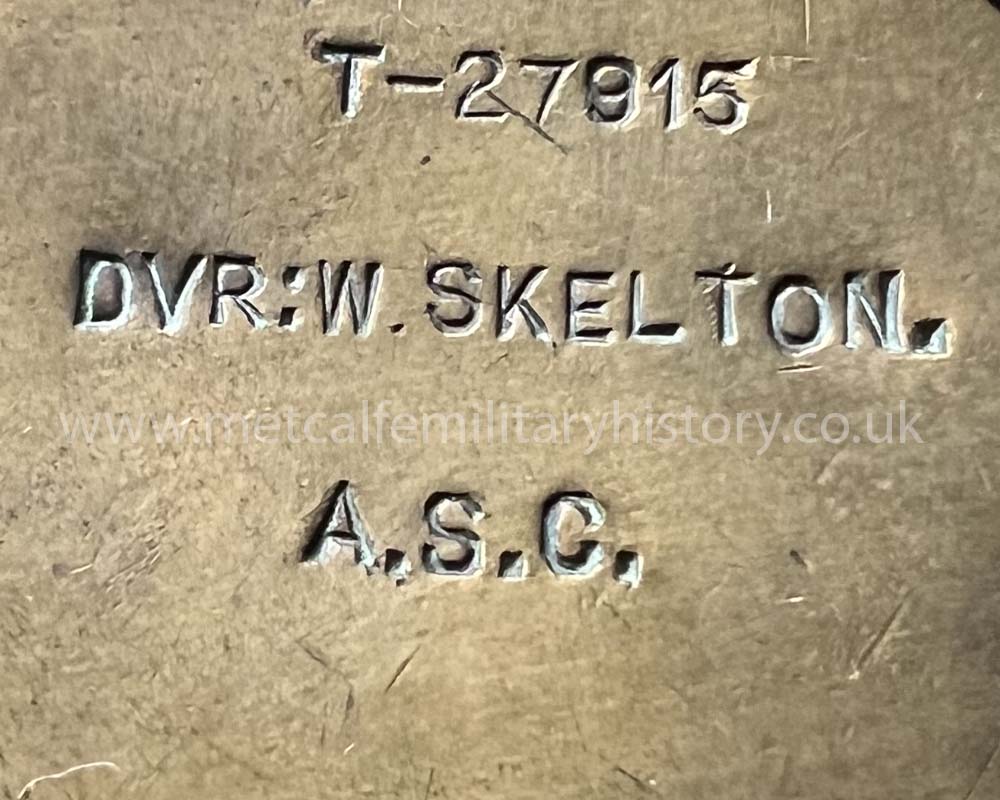
Those named to the Royal Navy and Royal Marines have a distinctly different naming style.
Variations
The 1914 Star (and photos of recipients wearing the medal), can sometimes be found with the rose attached to the ribbon of the full size medal. This was not an official practice or authorised, as the rose was for wear with medal ribbons only, not the medal itself.
Great War Medals
The 1914 Star was the first war service medal to be issued by the British Government. It was later followed by the 1914/15 Star, British War Medal, Victory Medal, Territorial Force War Medal and Mercantile Marine War Medal.
All those entitled to the 1914 Star were eligible for the British War Medal and Victory Medal when they were introduced. Therefore all 1914 Star recipients would receive a Trio of medals for service during the war, often referred to as ‘Pip, Squeak and Wilfred’, after a popular Daily Mirror cartoon of the time.
 Metcalfe Military History