“The horses must be the first thought of every cavalry soldier.“
Cavalry Division Standing Orders 1914 – Major General E H H Allenby C.B.
Much had been learned from the failings of the British cavalry in South Africa during the Boer War. When the Great War broke out in 1914, they were highly trained, well equipped and expecting a short campaign. The role these cavalrymen were to play in 1914 would prove pivotal in stopping the German advance and arguably preventing the war being lost. Happily, much has been published over the last few years to debunk the myth that cavalry had become useless cannon fodder during the war, but the vital role they played is still often forgotten or overlooked.
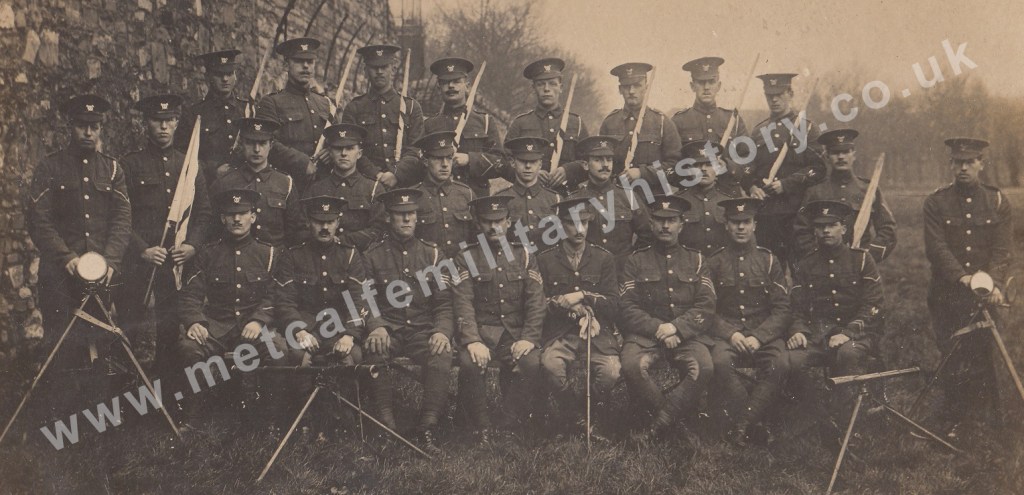
When mobilisation came in early August it proceeded with ease, having been practiced numerous times in the years leading up to war. Units were made up to war time strength, with reservists re-joining and extra horses requisitioned. With peacetime equipment packed away and additional equipment required for war issued, every man, horse and conceivable piece of equipment was inspected and rectified where necessary. In just over a week, the cavalry were mobilised and ready to set sail with the British Expeditionary Force (BEF). As quickly as mobilisation was undertaken, so too was the establishment of 14 Reserve Cavalry Regiments in August. These were to provide further drafts and train recruits ready to fill the ranks of the regular cavalry units as and when required.
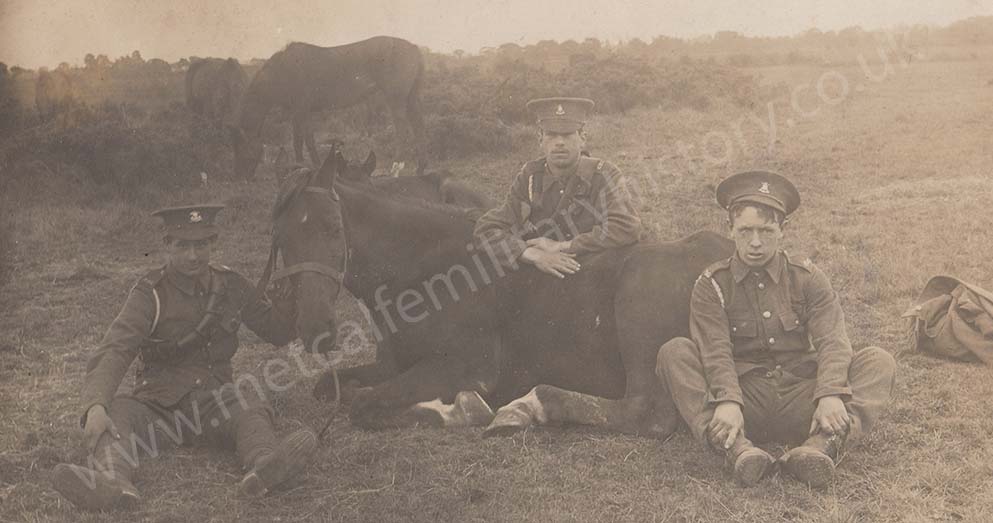
Each of the six infantry divisions that were to make up the original BEF were given a squadron of cavalry, supplied by the 15th Hussars and the 19th Hussars. In addition to the infantry divisions, a single Cavalry Division was formed of four Cavalry Brigades (under the command of Major General E H H Allenby C.B.), with a fifth Cavalry Brigade acting independently of the Division (under the command of Brigadier General Sir P W Chetwode D.S.O.). In total the British cavalry numbered over 9000 cavalrymen with just under 10,000 horses.
Order of Battle – Cavalry of the British Expeditionary Force August 1914
The Cavalry Division
| 1st Cavalry Brigade |
| 2nd Dragoon Guards |
| 5th Dragoon Guards |
| 11th Hussars |
| 2nd Cavalry Brigade |
| 4th Dragoon Guards |
| 9th Lancers |
| 18th Hussars |
| 3rd Cavalry Brigade |
| 4th Hussars |
| 5th Lancers |
| 16th Lancers |
| 4th Cavalry Brigade |
| 3rd Hussars |
| 6th Dragoon Guards |
| Household Cavalry Composite Regiment |
Independent Brigade
| 5th Cavalry Brigade |
| 2nd Dragoons |
| 12th Lancers |
| 20th Hussars |
Divisional Cavalry
| 15th Hussars (3 Squadrons split between the 1st, 2nd and 3rd Divisions.) |
| 19th Hussars (3 Squadrons split between the 4th, 5th and 6th Divisions.) |
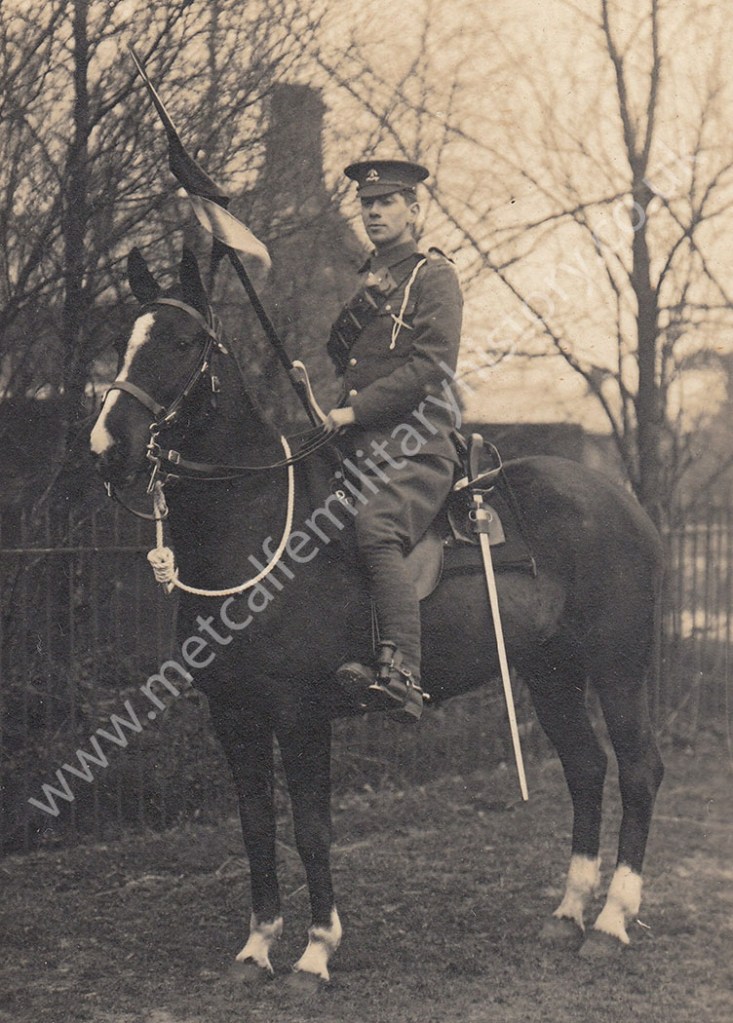
With Cavalry in 1914 – British Expeditionary Force to follow soon!
 Metcalfe Military History